
Awakening vs. Spiritual Escapism — Are You Waking Up or Avoiding Your Life?
Many people step onto the spiritual path with a sincere longing for clarity, peace, or transformation. But somewhere along the way, a quiet trap appears — a trap that looks like awakening, feels like progress, and even sounds “spiritual,” yet silently pulls you away from life instead of deeper into it. This trap is known as spiritual escapism.
It’s the moment when meditation becomes a hiding place, not a window into truth. When “love and light” becomes a shield from uncomfortable emotions. When spiritual ideas replace direct experience. When the ego puts on a robe and calls itself awakened.
And because spiritual escapism feels calm on the surface, many seekers confuse it with genuine awakening. This article explores the difference — not to create judgment, but to bring clarity. Because real awakening does not disconnect you from life; it roots you more deeply into it. And understanding the distinction between awakening and spiritual escapism is often the turning point where a seeker becomes truly awake.
1) What Is Spiritual Escapism (Spiritual Bypassing)?
To understand the difference between awakening and avoidance, we must first understand what spiritual escapism truly is. The term describes something subtle and often well-intentioned: using spirituality not to face life, but to escape from it.
Many seekers don’t even realize they are doing it. On the outside, everything looks “spiritual”: meditation, mantras, breathwork, silence, rituals, inner work. But on the inside, something essential is missing — contact with reality as it is.
Instead of meeting emotions, they rise above them. Instead of confronting fears, they spiritualize them. Instead of seeing the ego, they label everything “divine timing.”
Instead of growing inwardly, they float away from themselves.
This is the core of spiritual escapism:
It replaces presence with idealism and honesty with beautiful concepts. To better recognize when avoidance disguises itself as awakening, it can be helpful to understand the early signs of spiritual awakening more clearly.
The psychology behind spiritual escapism and avoiding real life
Behind most forms of escapism lies the same mechanism: a part of the mind is overwhelmed and seeks protection. Spirituality simply becomes the chosen hiding place.
People turn to spiritual practices as a way to avoid:
- uncomfortable emotions
- unresolved trauma
- daily responsibilities
- conflict or intimacy
- the discomfort of being human
Not because they are weak — but because they are hurting.
The mind whispers:
“If I meditate enough, maybe I won’t have to feel this.”
“If I stay in high vibration, nothing dark can touch me.”
“If everything is an illusion, maybe I can avoid my life.”
But avoidance, even in spiritual clothing, remains avoidance.
Why the ego uses spiritual escapism as protection
The ego is remarkably adaptive. If it feels threatened by traditional forms of identity, it creates a spiritual identity instead.
Suddenly the ego is:
- “the awakened one”
- “the healer”
- “the one who sees more than others”
- “the one above negativity”
It looks elevated — but it’s simply wearing a different costume. The purpose is the same: protection, not transformation. Spiritual escapism allows the ego to survive under the illusion of awakening. This is why so many seekers get stuck: they believe they are evolving, when in truth, they are defending themselves from life through spiritual means.
2) What True Awakening Really Is — and Why It Has Nothing to Do with Spiritual Escapism
Before we can understand awakening, we must understand what it is not. Many seekers confuse deep spiritual experiences, elevated moods, or peaceful states with awakening. But true awakening does not depend on states — it depends on seeing clearly.
Awakening is not an escape from your humanity. It is the moment you begin to meet your humanity fully.
Where spiritual escapism turns away from life, awakening turns towards it. Where escapism avoids emotions, awakening includes them. Where escapism denies the self, awakening sees through the self. Awakening is a shift from running away to becoming profoundly intimate with your inner and outer reality.
Clarifying the confusion: Spiritual Escapism vs. Spiritual Bypassing
These two terms are often used interchangeably, but they describe different layers of the same phenomenon and understanding the difference strengthens your awareness.
Spiritual escapism
…is the broader pattern of using spirituality to avoid life.
It can look like:
- escaping responsibilities through “detachment”
- avoiding emotions by meditating them away
- turning spirituality into a safe bubble
- confusing withdrawal with wisdom
It is a strategy of pulling away from what feels uncomfortable.
Spiritual bypassing
…is a more specific psychological mechanism.
Coined by psychotherapist John Welwood, it describes using spiritual concepts to skip emotional or psychological work.
Examples include:
- jumping to “everything happens for a reason” to avoid grief
- forcing forgiveness before feeling the pain
- calling anger “low vibration” instead of understanding it
- denying trauma by claiming “the past isn’t real”
Every bypassing is escapism —
but not every escapism is bypassing.
By clarifying these terms, you begin to see the subtle ways the ego can disguise avoidance as awakening.
And this clarity is crucial, because…
Awakening means facing reality, not escaping it
Real awakening dismantles illusion, not identity. It invites you deeper into direct experience, not away from it.
True awakening feels like:
- returning to your body instead of floating above it
- meeting emotions with presence instead of suppressing them
- allowing discomfort to reveal its truth
- dissolving concepts instead of hiding behind them
- becoming more honest, more grounded, more real
Awakening doesn’t make you untouchable — it makes you touch life more deeply. It is not a movement upwards into abstraction. It is a movement inward, into clarity.
How awakening dissolves illusion instead of creating a spiritual identity
The ego’s greatest trick is constructing a new identity called:
“I am awakened.”
“I am beyond emotions.”
“I am above negativity.”
“I only surround myself with high vibration.”
This identity might look spiritual, but it is simply the same ego wearing robes instead of armour. Awakening is the opposite:
It strips identity away, revealing what is beneath all masks.
It does not elevate you above life. It returns you to the truth of experience — raw, direct, present. When you truly awaken, you don’t become “special.” You become more sincere. More available. More aware. More aligned with reality.
This is why awakening and spiritual escapism can never coexist — one dissolves illusion, while the other relies on illusion to survive.
3) The Key Differences Between Awakening and Spiritual Escapism
Even though awakening and spiritual escapism can look similar from the outside — meditation, introspection, silence, “detachment” — internally they move in completely opposite directions.
One brings you into truth. The other takes you further away from it. Understanding the difference is essential, because many seekers get stuck not from lack of sincerity, but from misinterpreting avoidance as awakening. Below are the most revealing distinctions.
Escapism avoids emotions — awakening transforms them
One of the clearest signs of spiritual escapism is emotional avoidance.
Escapism says:
“If I stay spiritual enough, I won’t have to feel this.”
Awakening says:
“If I stay present enough, I can finally understand this.”
Escapism pushes emotions down; awakening allows them to rise. Escapism uses positivity as a shield; awakening uses honesty as a doorway.
Real spiritual growth is not the absence of emotion — it is the maturity to meet emotion without collapsing or running away. You don’t transcend feelings by avoiding them. You transcend them by understanding them.
Escapism seeks constant highs — awakening becomes still
Many seekers fall into spiritual escapism because they chase peak experiences:
- intense meditations
- bliss states
- third-eye sensations
- energy rushes
- profound synchronicities
The ego loves spiritual fireworks.
It loves to feel “special.” But awakening is not a continuous high. It is a continuous clarity. Instead of looking for spiritual intensity, awakening brings:
- stillness
- simplicity
- grounded presence
- the ability to sit with “ordinary” reality
While escapism depends on emotional or energetic stimulation, awakening is revealed through calm inner spaciousness. You stop needing extraordinary experiences, because the ordinary becomes extraordinary on its own.
Escapism inflates the ego — awakening dissolves it
This is perhaps the most subtle — and dangerous — difference. Spiritual escapism often creates a spiritual identity:
“I am awakened.”
“I am more conscious than others.”
“I only operate at a higher frequency.”
“I am beyond human emotions.”
This identity feels powerful but is fragile.
It is built on separation — the ego’s favourite structure. Awakening does the opposite. Awakening dissolves the need for identity. It strips away the layers of “who I think I am” until only awareness remains.
Awakening is not becoming a better person.
It is becoming less of a person and more of a presence. You don’t grow taller. You grow transparent. This is why the ego resists true awakening but embraces spiritual escapism — escapism keeps the ego alive; awakening reveals what exists beyond it.
4) The Subtle Signs of Spiritual Escapism
Spiritual escapism doesn’t always look like avoidance. In fact, most seekers fall into it unintentionally — not because they lack sincerity, but because the ego is skilled at using spirituality as a shield.
That’s why the signs are subtle. They sound spiritual, they feel peaceful, and they often come with the best intentions. But beneath the surface, they quietly pull you away from real awakening.
Here are the most common — and most misunderstood — signs of spiritual escapism and spiritual bypassing.
Using meditation to numb emotions (a major form of spiritual escapism)
Meditation is one of the most powerful tools for awakening. But it can also become a hiding place.
The difference is simple:
- Awakening uses meditation to see emotions.
- Escapism uses meditation to avoid emotions.
If someone immediately sits down to meditate whenever discomfort arises — not to understand it, but to make it disappear — this is spiritual escapism wearing the mask of practice. Meditation becomes emotional anesthesia instead of awareness.
Hiding behind positivity — the classic spiritual bypass
“Only good vibes.”
“Don’t focus on negativity.”
“Everything is perfect.”
“Just let it go.”
“It’s all love and light.”
While positivity can be beautiful, forced positivity is a sign of spiritual bypassing.
Why?
Because life is not exclusively “love and light.” Life is also grief, anger, confusion, uncertainty, shadow. Avoiding these experiences creates a split inside you — a form of emotional suppression disguised as wisdom. Awakening is not about staying positive. It is about staying present. Many seekers confuse emotional avoidance with inner guidance, which is why learning the difference between intuition and fear can offer valuable clarity.
Chasing spiritual experiences instead of observing the mind
For many seekers, spiritual escapism appears as a constant hunger for experiences:
- wanting deeper meditations
- seeking more intense energy
- needing spiritual highs
- chasing signs, symbols or cosmic meaning
- becoming dependent on synchronicities
This is not awakening — it is stimulation. Awakening is not about collecting experiences. It is about recognizing the one who experiences.
The more you chase spiritual intensity, the further you drift from the quiet, spacious awareness at the heart of awakening.
Rejecting the body or daily life in the name of spirituality
This is one of the clearest signs of spiritual escapism and one of the oldest traps in human spirituality.
Examples include:
- seeing the body as “less important” than the spirit
- ignoring physical needs while focusing on “higher states”
- believing daily responsibilities are distractions
- withdrawing from relationships as a sign of “awakening”
But awakening is never a rejection of life.
It is a deepening into life — into the body, into relationships, into the simplicity of daily existence. Escapism disconnects you. Awakening reconnects you. If spirituality pulls you away from being human, it is not awakening — it is avoidance.
5) Why Spiritual Escapism Is So Tempting During Early Awakening
Spiritual escapism doesn’t arise because someone is insincere. It arises because awakening is powerful — and the ego is terrified of what awakening reveals. When someone begins their spiritual awakening journey, something inside them opens, softens, becomes more aware. But at the same time, the structures that once held their identity together begin to loosen.
This inner shift is beautiful, but it can also feel overwhelming. The mind reacts instinctively: “I need protection.” And spirituality becomes the perfect hiding place. This is why spiritual escapism is especially tempting in the early stages of awakening. It feels safer than truth.
The mind’s fear of dissolution and why escapism feels safer
Awakening is not a hobby — it is a restructuring of consciousness. And whenever consciousness restructures itself, the ego fears dissolution.
The ego whispers:
- “If I face this emotion, it will break me.”
- “If I question my beliefs, I will lose myself.”
- “If I stop controlling, everything will fall apart.”
- “If I feel this pain, I won’t survive it.”
These whispers are not logical.
They are protective mechanisms, ancient and instinctive.
To the ego, awakening feels like death — not because the person dies, but because the illusion of self loses its central position.
So the ego searches for safety. And spirituality — with its quiet, its concepts, its practices, its promises of peace — becomes the ideal refuge.
Spiritual escapism allows the ego to feel “safe,” “spiritual,” and “above suffering,” without undergoing real transformation. If you are navigating these early shifts, strengthening your ability to trust your gut feeling can help you stay grounded instead of escaping into concepts.
Mistaking silence for disconnection — a hidden form of bypassing
As people begin their awakening, they often discover inner silence for the first time. This silence is extraordinary — peaceful, vast, transformative.
But here lies a subtle trap:
Silence is healing.
Disconnection is not.
Yet in early awakening, these two experiences can feel almost identical. Many seekers unknowingly drift into spiritual bypassing when they:
- mistake emotional numbness for peace
- confuse dissociation with detachment
- suppress discomfort and call it surrender
- disconnect from their body and call it transcendence
This is spiritual escapism disguised as “I’m so calm now.”
True silence is alive.
It is intimate, present, connected.
False silence is empty.
It is avoidance wrapped in spirituality.
The difference is profound — but at first, very difficult to see.
6) How to Return from Spiritual Escapism to Real Awakening
Escapism is not a failure. It is simply a phase — a detour the ego takes when spiritual growth becomes overwhelming.
And the moment you recognize the pattern, you are already moving out of it.
Returning from spiritual escapism to genuine awakening does not require dramatic interventions. It requires honesty. Presence. And a willingness to feel what you once avoided.
Here are the most effective and grounded ways to shift from avoidance to awakening.
Honest self-inquiry: the antidote to spiritual bypassing
One question cuts through every layer of spiritual escapism:
“What am I unwilling to feel right now?”
This question is powerful because:
- it exposes avoidance
- it brings unconscious material into light
- it reveals the truth beneath spiritual concepts
- it reconnects you to the present moment
- it dissolves illusion gently, without force
Self-inquiry is not analysis. It is not about digging or forcing revelations. It is simply the courage to stay open to what arises.
When you stop performing spirituality and start observing yourself honestly,
awakening naturally resumes.
Meeting emotions with presence instead of avoidance
Most spiritual escapism is emotional avoidance wearing sacred language.
People say:
- “I’m staying in high vibration.”
- “I’ve released that already.”
- “I don’t engage with negativity.”
- “I’ve transcended anger.”
But these statements often mask a simple truth: The emotion was never fully felt.
To return to real awakening, you don’t need to dig into trauma. You only need to make space for whatever is already here.
This means:
- allowing sadness without collapsing
- allowing anger without aggression
- allowing fear without retreat
- allowing confusion without judgment
Presence transforms what avoidance protects. Emotions metabolize when they are felt — not explained away.
Returning to the body, breath and daily life as grounding practices
One of the clearest signs of spiritual escapism is leaving the body — living in concepts, abstraction, or spiritual ideas instead of embodied reality.
To reverse this pattern, re-enter your body gently:
- feel your feet on the ground
- notice your breath without changing it
- pay attention to simple physical movements
- engage fully in one ordinary task each day
Grounded awareness dissolves escapism because you cannot be both fully present and avoiding life at the same time. Awakening begins in the body, not outside of it. And daily life — the simple, ordinary, often overlooked moments — becomes the most advanced spiritual practice of all.
7) Awakening Is Not Escapism — It Is a Deeper Engagement with Life
One of the most persistent misunderstandings on the spiritual path is the belief that awakening pulls you away from life — away from emotions, away from people, away from responsibilities, away from the world. But the truth is the opposite. Awakening does not disconnect you from life. Awakening reconnects you with life so completely that nothing remains outside of awareness.
Where spiritual escapism floats above the human experience, awakening enters the human experience with openness, honesty and presence.
The paradox: real spirituality makes you more human, not less
Many seekers imagine awakening as a movement toward perfection — no more anger, no more pain, no more confusion. But true awakening is not perfection. It is intimacy.
Deep intimacy with:
- your emotions
- your relationships
- your fears
- your body
- your truth
- your humanity
Awakening expands your ability to feel, not your ability to avoid.
You cry more honestly.
You love more deeply.
You speak more truthfully.
You listen more fully.
You show up more completely.
This is why those who awaken often appear softer, warmer, and more grounded — not elevated, distant or untouchable.
Awakening strips away illusion, not humanity.
Why awakening leads to embodiment, responsibility and clarity
When spiritual escapism collapses, many seekers fear that life will feel heavier.
But something very different happens:
Life becomes clearer.
Because you are no longer running, emotions lose their intensity. Because you are no longer pretending, your relationships become authentic. Because you are no longer hiding, your choices become simple. Because you are no longer split inside, your energy returns. Awakening brings you into your life, not away from it.
You become more responsible — not out of pressure, but out of clarity. You become more grounded — not out of effort, but out of presence. You become more truthful — not out of discipline, but out of alignment.
This is why awakening and spiritual escapism cannot coexist. One dissolves illusion. The other depends on illusion.
Awakening reveals reality. Escapism avoids it. And once you taste the difference, you don’t want the illusion anymore — you want the truth.
8) Final Thoughts — Stop Escaping. Start Awakening.
Spirituality becomes dangerous only when it turns into an escape. But awakening becomes powerful the moment it becomes real.
And “real” does not mean perfect. It does not mean blissful. It does not mean peaceful at all times.
Real awakening means being willing to stand where you are — without running, without numbing, without hiding behind spiritual ideas. It means feeling what you once avoided. Seeing what you once denied.
Allowing what you once suppressed.
It means stepping out of spiritual escapism and stepping into presence.
Not the idea of presence. Not the performance of presence. But the direct, unfiltered experience of this very moment.
Awakening asks you to engage with life, not escape it. To look inward, not upward.
To meet yourself, not abandon yourself.
And when you stop avoiding your life, something extraordinary happens:
Life stops avoiding you.
Clarity returns.
Energy returns.
Truth returns.
A deeper intelligence begins to guide you — quietly, naturally, without force.
Your journey does not begin when you feel enlightened. Your journey begins the moment you say:
“I will no longer use spirituality to avoid my life. I will use it to awaken to it.”
Take one conscious breath. Notice what is here. Everything begins from this point.
If you want to dive deeper into these themes, you can explore the book The Ultimate Revolution here.

New Releases
Books from Jay Ghee

365 citations pour méditer
By Jay Ghee 365 citations pour méditerLes 365 pensées inédites de ce livre invitent l'éveil de l'intelligence. Jay Ghee présente ici une collection de réflexions profondes, d'aphorismes riches en sagesse, humour et observations conçus pour éveiller le questionement....

The ultimate revolution
By Jay Ghee The ultimate revolution A Journey Beyond Thought In an age of chaos, distraction, and inner conflict, The Ultimate Revolution invites you on the only journey that truly transforms—the journey inward. Through a synthesis of timeless wisdom and modern...
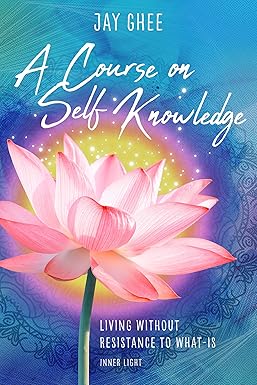
A course on Self-Knowledge
By Jay Ghee A Course on Self-Knowledge Living without resistance what-is This course addresses the most essential question in life:Who am I? It’s not a theory, a belief, or a system. It’s a path. One that leads you inward—toward clarity, stillness, and the direct...
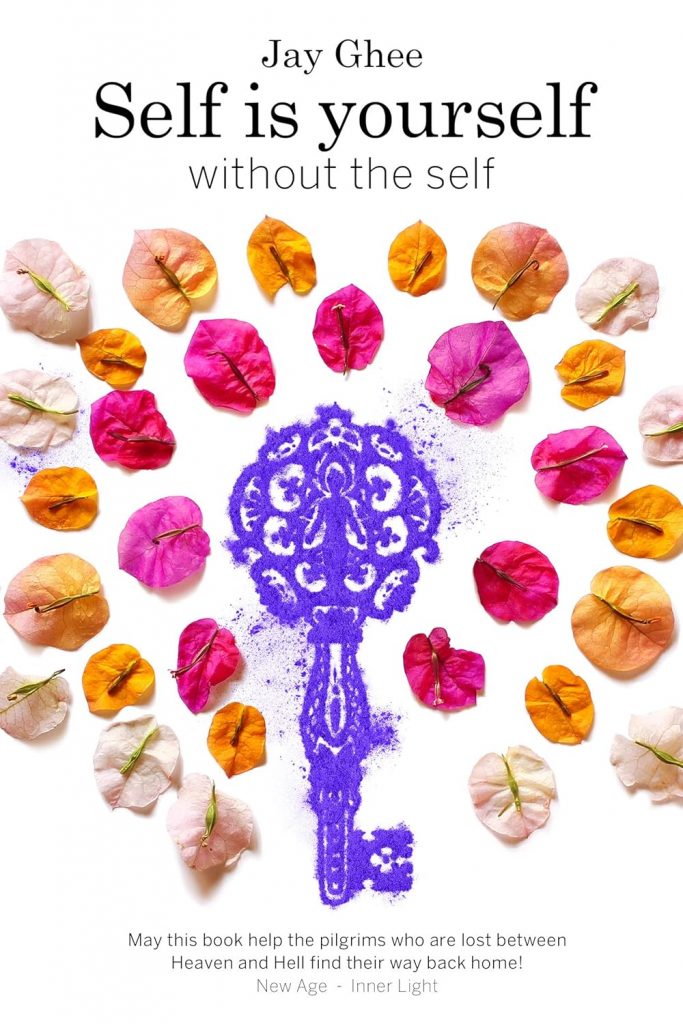
Self is yourself without the self
By Jay Ghee Self is yourself without the selfA contemplative guide to dissolving ego, awakening pure awareness, and living beyond the illusion of “me". What if everything you believe about yourself—your story, your ego, your spiritual ambitions—is simply a mask worn...
L’ultime révolution
By Jay Ghee L'ultime révolutionÀ travers l’enseignement des grands sages, Jay Ghee guide ses lecteurs vers une compréhension profonde du rôle de l’ego et montre comment s’en libérer pour accéder à la paix intérieure et à la joie véritable. Un chapitre entier est...

Mon Tonton d’A…fric
By Jay Ghee Mon Tonton d´ A...fricCinq jeunes cousins de la région bordelaise reçoivent chacun une énigmatique missive venue d’Afrique. Héritage ou simple mystère ? Malgré les inquiétudes de leurs proches, ils se laissent entraîner dans une aventure haute en couleur,...
Schedule an Event
info@jayghee.com
Book an Interview
info@jayghee.com
Contact Jay Ghee
info@jayghee.com