
When You Don’t Trust Your Intuition Anymore
There is a particular kind of unease that appears when intuition no longer feels reliable. Not dramatic, not explosive —butquietly disorienting.
You hesitate where you once moved with ease. Inner signals feel inconsistent. What used to feel clear now feels blurred, or strangely charged. And slowly, a deeper doubt creeps in: If I can’t trust my intuition, what can I trust?
Not trusting your intuition is often interpreted as failure — a sign of disconnection, regression, or loss of inner clarity. But this interpretation is misleading. In many cases, the erosion of trust is not a mistake. It is a transition.
This moment does not signal that intuition has disappeared. It signals that something more subtle is being asked of you: discernment instead of impulse, attention instead of belief.
The quiet crisis of not trusting your intuition anymore is rarely talked about. And yet, it marks a decisive turning point — one where inner life matures beyond simple guidance into responsibility.
Agenda
- When Inner Guidance Stops Feeling Reliable
- Why Not Trusting Your Intuition Often Happens Under Pressure
- Not Trusting Your Intuition vs. the Need for Certainty
- How the Ego Learns to Speak the Language of Intuition
- Losing Trust in Your Intuition as a Necessary Phase
- Discernment Is Not Another Inner Voice
- What Remains When You Stop Following Yourself
- The Gut Feeling Guide as a Book About Discernment
- Frequently Asked Questions About Not Trusting Your Intuition
When Inner Guidance Stops Feeling Reliable
The loss of trust rarely arrives suddenly. It unfolds gradually, almost unnoticed. At first, intuition still appears — but it no longer carries the same authority. Signals feel mixed with emotion. Urgency sneaks in. What once felt calm now feels charged with expectation or fear. You begin to second-guess yourself, replay decisions, question motives.
This is often the point where people assume something has gone wrong. But the issue is not that intuition has stopped functioning. It is that the conditions under which intuition once felt reliable have changed.
As life becomes more complex — emotionally, relationally, ethically — intuitive impulses are no longer isolated. They are entangled with desire, responsibility, memory, and consequence. The inner landscape becomes crowded.
In this terrain, intuition does not disappear. It becomes harder to isolate. What is commonly experienced as “losing intuition” is often the collapse of naive trust — the belief that inner signals are always clear, always benevolent, always correct. When that belief dissolves, confusion arises. But confusion is not the enemy here.
It is a sign that automatic following is no longer sufficient.
Not trusting your intuition anymore can feel like disorientation, but it is also the beginning of a more honest relationship with inner life — one that no longer seeks certainty, but clarity.
Why Not Trusting Your Intuition Often Happens Under Pressure
Pressure changes everything.
Under emotional strain, time pressure, or high personal stakes, intuition does not vanish — it becomes distorted. Signals accelerate. Inner voices grow louder. What feels like guidance often carries urgency, justification, or fear beneath it.
This is where not trusting your intuition becomes an act of intelligence rather than doubt.
Pressure amplifies projection. The mind fills gaps quickly. Desire masquerades as knowing. Fear adopts the language of inner truth. And the more important the decision feels, the harder it becomes to distinguish perception from interpretation.
Intuition itself is quiet. It does not argue. It does not insist. It does not rush.
When urgency dominates, intuition is no longer leading — something else is. Often the need for certainty, relief, or control takes over and uses intuitive language as cover.
This is why many people experience their most confusing “intuitive” moments precisely when the stakes feel highest.
The problem is not intuition.
The problem is pressure combined with interpretation.
Learning to pause when intuition feels urgent — rather than following it blindly — is not a betrayal of inner guidance. It is respect for its limits.
Not trusting your intuition in these moments is not a weakness. It is discernment beginning to form.
Not Trusting Your Intuition vs. the Need for Certainty
One of the most overlooked reasons for not trusting your intuition is not confusion, but the hidden demand for certainty.
Certainty is seductive. It promises relief from doubt, from hesitation, from the discomfort of not knowing. When uncertainty becomes intolerable, the mind looks for something that feels solid — and intuition is often recruited for this role.
But intuition does not offer guarantees.
It does not arrive with explanations or proof. It does not resolve complexity into certainty. When inner signals are asked to provide reassurance, they are no longer functioning as intuition — they are serving the need to feel safe.
This is where misinterpretation begins. What presents itself as inner knowing often carries a quiet insistence: this must be right, this has to mean something, I need to act now. The presence of urgency is not a sign of clarity. It is usually a sign that uncertainty is being resisted.
In these moments, not trusting your intuition is not a failure of confidence. It is a recognition that something else is driving the process. Intuition leaves room for hesitation. The need for certainty cannot tolerate it.
Learning to notice this difference does not require new techniques. It requires the willingness to stay with uncertainty without immediately resolving it. When certainty is no longer demanded, intuition regains its natural pace — quiet, spacious, uninsistent.
How the Ego Learns to Speak the Language of Intuition
The ego rarely announces itself openly. It adapts. As inner language becomes more refined, the ego learns to mimic clarity. It adopts the vocabulary of intuition, stillness, and inner truth. Decisions are framed as “what feels right.” Doubt is dismissed as resistance. Responsibility is softened by spiritual justification.
This is not deception in the moral sense. It is conditioning doing what it has always done: protecting a sense of control.
In this way, not trusting your intuition becomes necessary. Without skepticism, inner life can quietly turn into self-confirmation.
The ego does not usually push aggressively. It persuades gently. It presents preferences as guidance, avoidance as wisdom, fear as sensitivity. And because the language sounds calm and sincere, it often goes unquestioned.
The key distinction is subtle but consistent. Ego-driven impulses seek closure. They want resolution, validation, and relief.
Intuition does not seek closure. It does not need to be believed. It does not demand agreement. When inner signals come with justification, narrative, or a need to convince — something else is speaking.
This is not a call to distrust oneself permanently. It is an invitation to stop romanticizing inner signals. Intuition does not need loyalty. It needs space.
And sometimes, that space is created precisely by not trusting your intuition — until clarity stands on its own, without persuasion.
Losing Trust in Your Intuition as a Necessary Phase
There is a phase in inner development that is rarely acknowledged, because it feels like failure: losing trust in your intuition.
After a period of relying on inner signals — sometimes with confidence, sometimes with enthusiasm — something begins to fracture. What once felt clear now feels questionable. The impulse to act is followed by hesitation. Inner certainty no longer arrives on demand. This phase is often misread as regression. In truth, it marks a transition.
Earlier trust in intuition is frequently built on simplicity. Inner signals are taken at face value. They are followed because they feel right. But as experience accumulates, so does complexity. Consequences become visible. Patterns repeat. What once worked effortlessly now produces ambiguity.
This is not intuition failing. It is innocence dissolving. Losing trust in your intuition can feel destabilising, because it removes a familiar reference point. But it also dismantles a subtle dependency — the habit of outsourcing responsibility to inner impulses.
In this phase, intuition is no longer something to follow. It becomes something to relate to differently. The inner revolution here is quiet but decisive: instead of asking What does my intuition tell me to do?, attention shifts to What is actually happening — inwardly and outwardly — right now?
Trust is not rebuilt by returning to certainty. It is rebuilt by tolerating ambiguity. And through that tolerance, something steadier than trust begins to form: discernment.
Discernment Is Not Another Inner Voice
Discernment is often misunderstood as a refined form of intuition — a clearer signal, a wiser inner voice, a more accurate feeling.
It is none of these. Discernment does not speak. It does not advise. It does not compete with other inner impulses. Discernment is the absence of compulsion.
Where intuition may appear as a signal, discernment appears as space. Space between impulse and action. Space between interpretation and meaning. Space in which urgency dissolves before decisions are made.
This is why discernment cannot be mistaken for guidance. It offers no direction. It does not replace intuition with something better. It simply prevents premature movement.
When discernment is present, not trusting your intuition no longer feels threatening. There is no pressure to decide immediately. No need to justify hesitation. No fear of missing the “right” signal. Discernment restores proportion.
It allows intuition to arise — or not arise — without demand. And when intuition does appear, it is no longer burdened with responsibility for outcome. It is one element among many: context, ethics, consequence, relationship.
This is the maturity of inner life. Not a louder voice. Not a purer signal. But a quieter relationship with experience itself.
What Remains When You Stop Following Yourself
There is a subtle shift that occurs when you stop following inner impulses as directives.
At first, this can feel like loss. Without inner commands, orientation seems to fade. Decisions slow down. The familiar sense of being guided weakens. And yet, something unexpected appears in the space that opens.
Responsibility returns.
When intuition is no longer treated as instruction, life is no longer negotiated with inner signals. Attention moves outward as much as inward. Context matters again. Consequences are considered. Ethics are no longer bypassed by sincerity. This does not result in paralysis.
Action still happens. Choices are still made. But they arise from presence rather than pressure. From clarity rather than compulsion. From engagement with reality as it is — not as it is hoped to be.
In this space, intuition is no longer a leader. It becomes a participant. Sometimes it appears. Sometimes it doesn’t. And when it does, it no longer carries the weight of decision. It informs without commanding.
What remains when you stop following yourself is not emptiness. It is proportion. The self is no longer positioned at the center, demanding guidance. Experience is met directly. Life is no longer interpreted primarily through inner signals, but through attention, relationship, and consequence.
This is not less intuitive.
It is more honest.
The Gut Feeling Guide as a Book About Discernment
The Gut Feeling Guide is often mistaken for a book about trusting intuition.
It is not.
It does not encourage greater confidence in inner signals, nor does it promise clearer guidance. Instead, it examines the conditions under which intuition becomes distorted — and the subtle ways meaning, fear, and desire interfere with perception.
At its core, the book is about discernment.
Not as a method.
Not as a skill.
But as a quality of attention that emerges when urgency ends.
Through reflection, lived experience, and philosophical inquiry, The Gut Feeling Guide does not teach readers what to follow. It invites them to question the impulse to follow at all. To notice when intuition is asked to replace responsibility, certainty, or ethical clarity.
In this sense, the book does not resolve the discomfort of not trusting your intuition. It stays with it. It treats this discomfort as a necessary threshold — one that leads away from romanticised inner guidance and toward a more grounded relationship with life.
Discernment, here, is not about choosing better signals. It is about learning to listen without immediately believing. And sometimes, that is the most reliable form of inner clarity available.
Frequently Asked Questions About Not Trusting Your Intuition
Is it normal to stop trusting your intuition?
Yes. Not trusting your intuition is a common and often necessary phase. It usually appears when inner signals become entangled with fear, pressure, or personal desire. Rather than indicating failure, it often marks a shift toward greater discernment.
Can intuition be wrong?
Intuition itself is not “wrong,” but it can be misinterpreted. When inner signals are mixed with urgency, emotional attachment, or the need for certainty, what feels intuitive may actually be projection or fear.
How do I know if fear is influencing my intuition?
Fear-driven impulses tend to feel urgent, repetitive, and demanding. Intuition, by contrast, is quiet and does not insist. If a signal requires immediate action or justification, fear is often involved.
Should I stop listening to my intuition altogether?
No. The issue is not listening, but following without discernment. When intuition is no longer treated as instruction, it can be allowed to inform rather than direct decisions.
Why does intuition feel clear at some times and unreliable at others?
Intuition is most accessible in states of inner quiet. Under stress, emotional overload, or high stakes, perception becomes distorted. In such moments, not trusting your intuition can be an intelligent response.
What replaces intuition when trust dissolves?
Nothing replaces intuition. What emerges instead is discernment — a spacious awareness that allows signals, thoughts, and emotions to arise without immediately acting on them.
Does losing trust in intuition mean losing inner guidance?
No. It means losing reliance on naive guidance. Inner clarity does not disappear; it becomes less dramatic, less signal-based, and more grounded in presence and responsibility.
Is discernment another inner voice?
No. Discernment is not a voice or a feeling. It is the absence of compulsion — the space in which decisions are no longer rushed or justified by inner narratives.

New Releases
Books from Jay Ghee
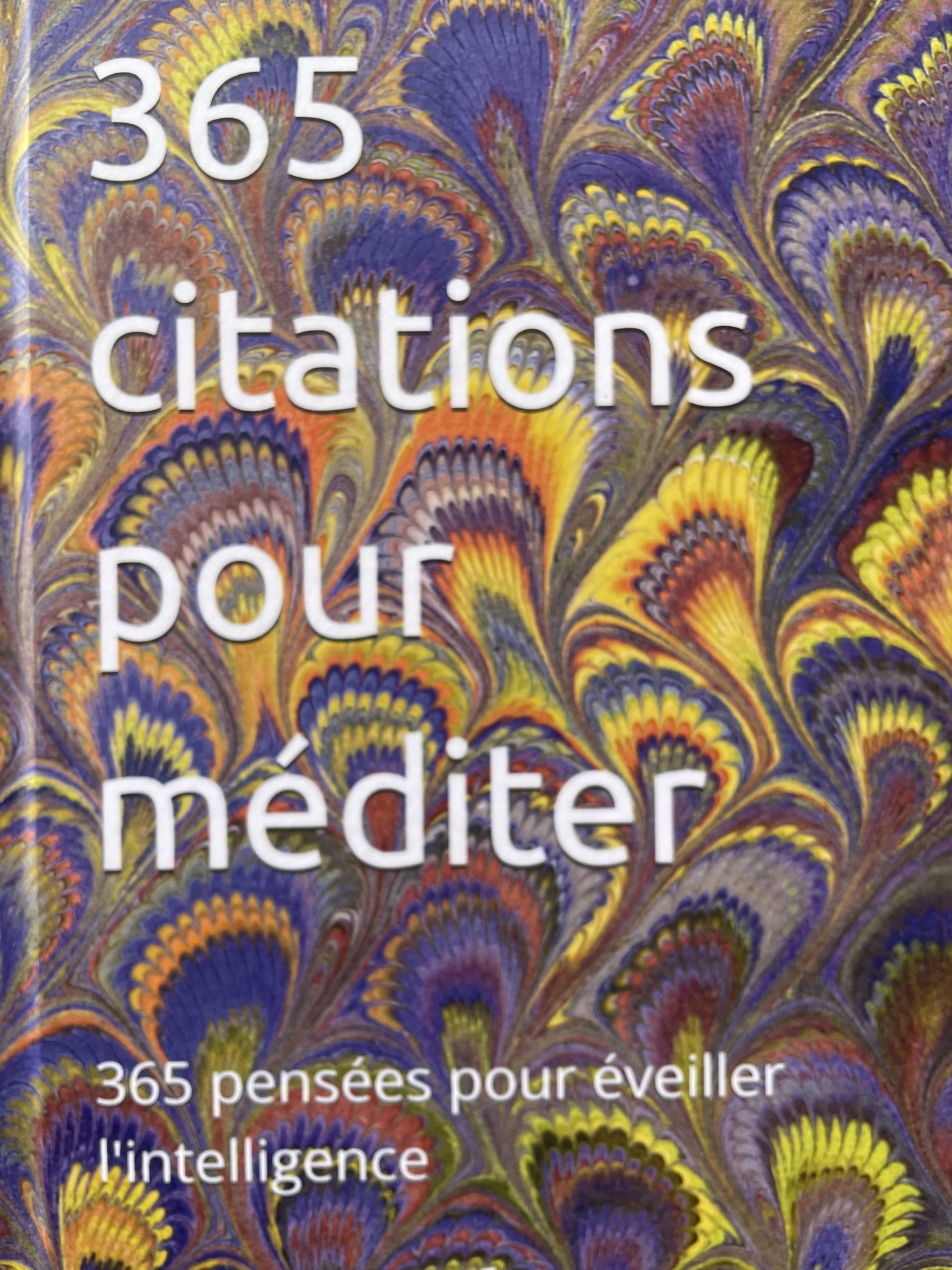
365 citations pour méditer
By Jay Ghee 365 citations pour méditerLes 365 pensées inédites de ce livre invitent l'éveil de l'intelligence. Jay Ghee présente ici une collection de réflexions profondes, d'aphorismes riches en sagesse, humour et observations conçus pour éveiller le questionement....

The ultimate revolution
By Jay Ghee The ultimate revolution A Journey Beyond Thought In an age of chaos, distraction, and inner conflict, The Ultimate Revolution invites you on the only journey that truly transforms—the journey inward. Through a synthesis of timeless wisdom and modern...
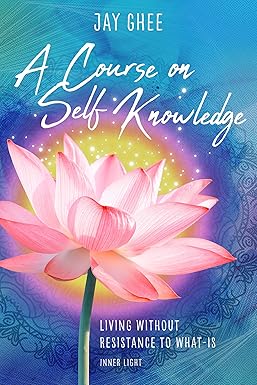
A course on Self-Knowledge
By Jay Ghee A Course on Self-Knowledge Living without resistance what-is This course addresses the most essential question in life:Who am I? It’s not a theory, a belief, or a system. It’s a path. One that leads you inward—toward clarity, stillness, and the direct...

Self is yourself without the self
By Jay Ghee Self is yourself without the selfA contemplative guide to dissolving ego, awakening pure awareness, and living beyond the illusion of “me". What if everything you believe about yourself—your story, your ego, your spiritual ambitions—is simply a mask worn...
L’ultime révolution
By Jay Ghee L'ultime révolutionÀ travers l’enseignement des grands sages, Jay Ghee guide ses lecteurs vers une compréhension profonde du rôle de l’ego et montre comment s’en libérer pour accéder à la paix intérieure et à la joie véritable. Un chapitre entier est...

Mon Tonton d’A…fric
By Jay Ghee Mon Tonton d´ A...fricCinq jeunes cousins de la région bordelaise reçoivent chacun une énigmatique missive venue d’Afrique. Héritage ou simple mystère ? Malgré les inquiétudes de leurs proches, ils se laissent entraîner dans une aventure haute en couleur,...
Schedule an Event
info@jayghee.com
Book an Interview
info@jayghee.com
Contact Jay Ghee
info@jayghee.com