
Meaningful Coincidences
When Intuition Reveals Truth — and When the Mind Creates Illusion
Meaningful coincidences are often dismissed as chance — until they happen to us.
You think of someone you haven’t spoken to in years, and they call. You open a book at random, and a single sentence answers a question you never formulated out loud. These moments feel different from ordinary coincidence. They carry a quiet weight, a sense of relevance that cannot be explained away so easily. Yet this is exactly where uncertainty begins.
Because while some coincidences feel deeply meaningful, others are nothing more than the mind searching for reassurance, direction, or control. The line between insight and illusion is thin. And the human tendency to weave meaning into events is as powerful as it is dangerous.
This article is not an attempt to explain away meaningful coincidences — nor to elevate them into proof of hidden forces. Instead, it explores the fragile space in between. The space where intuition may reveal something real, and where the mind may simply be projecting its own fears, hopes, or unfinished stories.
To approach meaningful coincidences honestly requires restraint. It asks for attention without interpretation, curiosity without urgency, and the humility to admit that not everything that feels significant necessarily is. That discipline — more than belief — is where clarity begins. Not every coincidence carries meaning — and learning to tell the difference is where real discernment begins.
Agenda:
- What Are Meaningful Coincidences — and Why They Disturb the Rational Mind
- Meaningful Coincidences vs Random Events
- When Intuition Is Real — and When the Mind Is Speaking
- Projection, Desire, and the Need for Control
- Stress and the Veiling of Perception
- Jung, Synchronicity, and the Thin Line Between Insight and Illusion
- Learning to Stay With Uncertainty
- Meaningful Coincidences as Invitations — Not Instructions
- The Gut Feeling Guide and the Discipline of Inner Listening
- If You’re Looking for Meaning Without Illusion
What Are Meaningful Coincidences — and Why They Disturb the Rational Mind
Meaningful coincidences are not disturbing because they are mysterious. They are disturbing because they disrupt certainty.
A coincidence becomes meaningful when an external event aligns with an inner state in a way that feels precise, personal, and strangely intimate. It is not the event itself that unsettles us, but the feeling that it somehow knows us — that it mirrors something already alive within.
The rational mind struggles here. Not because it lacks intelligence, but because it depends on linear causality. Cause, effect, explanation. Meaningful coincidences do not follow that order. They appear complete, without justification, and resist being traced back to a single source.
Carl Jung described this phenomenon as synchronicity: the coincidence of an inner state and an outer event, connected not by cause, but by meaning. For Jung, this was not evidence of magic, but a challenge to the limits of rational explanation. Meaning, he suggested, might sometimes arise independently of causality.
What makes meaningful coincidences so unsettling is not their rarity, but their ambiguity. They invite interpretation without offering guidance. They feel intimate, yet remain impersonal. And because they arrive without instruction, they place responsibility back onto the observer.
This is where many people stumble.
Instead of staying with uncertainty, the mind rushes to conclude. It declares signs, messages, destinies. It assigns intention where there may be none. In doing so, it replaces openness with narrative — and mystery with comfort.
Meaningful coincidences do not demand belief.
They demand patience.
Only when we resist the urge to immediately explain them do they retain their quiet power. Not as answers, but as invitations to observe more carefully — both the world, and the one who is observing it.
Meaningful Coincidences vs Random Events
Not every coincidence carries meaning.
And learning to tell the difference is where discernment begins.
The human mind is exceptionally good at connecting dots. This ability has kept us alive, helped us learn, and allowed us to navigate complex social worlds. But the same skill that enables understanding can also become a trap. When the need for meaning is strong enough, the mind will create it — whether it is truly there or not.
Random events are neutral. They happen without reference to our inner state. A delayed train, a chance encounter, a sentence overheard in passing — these may feel striking, but they do not necessarily point beyond themselves. Meaningful coincidences, by contrast, seem to arise at a very specific intersection: where an outer event meets an inner readiness. The difficulty is that this distinction cannot be measured objectively.
A coincidence does not become meaningful because it is unusual, emotional, or surprising. It becomes meaningful only when it resonates with clarity rather than urgency. True intuitive recognition is quiet. It does not rush to be interpreted. It does not demand action. And it does not insist on being believed. Projection, on the other hand, is often loud.
When fear, desire, or expectation are present, the mind tends to seize upon events as confirmation. A coincidence is no longer observed; it is recruited. It is asked to justify a decision, soothe uncertainty, or provide reassurance. In such moments, meaning is not discovered — it is imposed.
This is why meaningful coincidences are rare. Not because life withholds them, but because they require a particular inner posture: openness without demand. The moment we need a sign, we are already at risk of misreading one.
Staying with uncertainty is uncomfortable. It leaves questions unanswered. But it also protects perception from distortion. By allowing events to remain unexplained for a while, we give intuition the space to clarify itself — or to dissolve.
Not every coincidence asks for interpretation. Some simply pass through our lives, unnoticed and complete. Learning to stay with uncertainty is often more important than trying to immediately trust your gut feeling.
When Intuition Is Real — and When the Mind Is Speaking
One of the most difficult distinctions to make is not between intuition and reason, but between intuition and fear and the voice that pretends to be it.
Intuition does not argue for itself.
It does not persuade, threaten, or seduce.
When it appears, it tends to be simple — sometimes almost disappointingly so. The mind, by contrast, is eloquent.
It speaks in stories. It builds scenarios. It anticipates outcomes and rehearses explanations. When fear or desire are active, the mind often borrows the language of intuition to justify its conclusions. What feels like an inner knowing may, on closer inspection, be a carefully disguised preference. A useful indicator is tone.
Real intuition is quiet and spacious. It does not demand immediate action. There is no urgency attached to it, no pressure to decide now. It may even allow doubt to remain present. The clarity it brings is subtle — more a sense of alignment than a command.
The mind’s voice is different. It insists. It repeats itself. It seeks confirmation and reacts strongly to contradiction. When challenged, it grows louder, not clearer. This is especially evident when intuition is invoked to avoid discomfort: leaving a relationship without reflection, refusing responsibility, or pursuing a desire under the banner of “inner truth”. Another distinction lies in outcome.
Intuition does not promise certainty. Following it may lead into the unknown, without reassurance of success or safety. The mind, however, tends to offer guarantees — or at least convincing narratives about why things will work out. When a supposed intuition comes with a detailed forecast of rewards or recognition, caution is warranted.
This does not mean intuition is infallible. It means it is not dramatic. Learning to recognise this difference requires restraint. It asks us to slow down our interpretations and to tolerate not knowing for a while. Often, what we initially take for intuition becomes quieter over time — or reveals itself as something else entirely.
True intuition survives waiting. The mind rarely does.
Projection, Desire, and the Need for Control
Projection begins where uncertainty becomes uncomfortable.
When events remain open, ambiguous, or unresolved, the mind often steps in to complete the picture. It fills gaps with intention, direction, and purpose — not out of malice, but out of a deep need for orientation. Meaning offers relief. It gives the feeling that something is held, that nothing is random, that life is somehow organised around us. Desire plays a central role here.
When we want something badly enough — reassurance, love, success, confirmation — our perception subtly bends toward it. Coincidences are no longer observed; they are recruited. A gesture becomes a sign. A delay becomes guidance. A difficulty becomes a test. The narrative forms quickly, and once it has formed, it is difficult to question without feeling destabilised.
Control often hides behind these interpretations. Believing that events are meaningful can feel empowering. It suggests that we are aligned, chosen, or protected. But it can also be a way of avoiding the vulnerability of not knowing. Projection turns uncertainty into a story we can manage. It replaces openness with coherence — even when that coherence is self-created. This is where spiritual language becomes especially seductive.
Words like sign, destiny, or guidance can be used to bypass honest self-inquiry. Instead of asking, What am I afraid of? or What do I want this to justify?, the mind reaches outward. Meaning is placed onto the world so that inner conflict does not have to be faced directly.
The problem is not meaning itself. The problem is urgency.
When meaning must be assigned quickly, it is rarely reliable. Projection thrives on speed. It dislikes pauses. It resists silence. Intuition, by contrast, does not collapse when left without interpretation. It remains intact even when we refrain from acting on it.
Learning to notice projection is not about becoming suspicious of every inner signal. It is about recognising the emotional charge behind interpretation. When desire, fear, or the need for certainty are present, discernment becomes essential.
Meaningful coincidences do not grant control. They remove the illusion of it.
Stress and the Veiling of Perception
Stress does not only affect the body.
It alters perception.
When the nervous system is under constant pressure, attention narrows. The world is no longer received openly, but filtered through urgency. In this state, the mind becomes reactive. It scans for threat, opportunity, and confirmation — not for truth. This has direct consequences for intuition.
Under stress, subtle signals are easily drowned out. What remains are louder impulses: fear-driven thoughts, compulsive interpretations, the need to act quickly. The inner quiet in which intuition becomes perceptible is replaced by mental noise. Coincidences may still occur, but they are more likely to be misread. This is why periods of exhaustion often coincide with confusion.
When perception is veiled by stress, meaning becomes distorted. Events are no longer met with curiosity, but with expectation. The mind anticipates relevance and interprets accordingly. In such moments, coincidence feels urgent rather than spacious. It pushes instead of inviting. Clarity, by contrast, arises in slower states.
It appears when the body is regulated, when attention can rest without grasping. In those conditions, intuition does not need to announce itself. It is simply present — unobtrusive, grounded, and proportionate to the situation at hand.
This does not mean that stress must be eliminated before intuition can function. Life rarely allows that. But it does mean that discernment improves when we acknowledge our state. Recognising tension as a filter — rather than as a source of insight — already restores a degree of honesty.
Meaningful coincidences do not compensate for inner overload.
They require receptivity. The quieter the system, the less interpretation is needed. And often, what remains when interpretation falls away is enough.
Jung, Synchronicity, and the Thin Line Between Insight and Illusion
Synchronicity was never meant to offer certainty. It was meant to point at a limit.
When Jung introduced the idea, he did not propose a new belief system. He described a phenomenon that resisted existing categories — events connected by meaning rather than by cause. What mattered to him was not why they happened, but what they revealed about the relationship between inner and outer reality. And that relationship is fragile.
Synchronicity does not confirm interpretation; it challenges it. It asks the observer to remain aware of their own participation in meaning-making. The coincidence is not meaningful on its own. Meaning arises in the encounter — and with it comes responsibility. This is where illusion often enters.
When synchronicity is treated as evidence, it hardens into belief. When it is taken as confirmation of personal narratives, it loses its subtlety. The event is no longer met as a mystery, but as a message that must be decoded. At that point, insight quietly gives way to projection.
Jung himself warned against this. He understood that the psyche is capable of extraordinary symbolism — and extraordinary self-deception. The same imagination that allows depth and creativity can also produce convincing illusions. Without humility, synchronicity becomes a mirror that reflects only what the observer wants to see. The thin line lies in posture.
Insight remains open. It does not rush to conclude. It tolerates ambiguity. Illusion seeks closure. It wants certainty, direction, and reassurance. The difference is not intellectual, but ethical. It is about how much responsibility we are willing to take for our interpretations.
Meaningful coincidences do not absolve us from discernment. They demand more of it.
When approached carefully, synchronicity can deepen attention. It can invite reflection, restraint, and a more intimate listening to life. When approached carelessly, it can reinforce fantasy and bypass reality altogether.
The event does not decide which path is taken. The observer does.
Learning to Stay With Uncertainty
Uncertainty is not a flaw in perception.
It is a condition of honesty.
Most misinterpretations of intuition and coincidence arise not from ignorance, but from discomfort. The discomfort of not knowing what something means. The tension of leaving an experience open, unfinished, without resolution. For many people, this state feels unbearable — and so meaning is assigned quickly, even prematurely. Learning to stay with uncertainty is a discipline.
It does not mean suspending discernment or refusing insight. It means postponing interpretation. Allowing events to exist without immediately weaving them into a narrative. This restraint creates space — and in that space, something subtle becomes possible: clarity without force.
Intuition does not require immediate recognition. If it is real, it will endure.
What fades quickly under the pressure of time and doubt is often mental construction. What remains quiet, proportionate, and intact after waiting is more trustworthy. This is why patience is not passive here. It is an active form of discernment. Staying with uncertainty also restores humility.
It reminds us that not every experience is meant to be understood right away — or at all. Some moments are complete in themselves. Others reveal their meaning only through hindsight, when the need to control has loosened and perspective has widened. This approach does not diminish life’s depth. It protects it.
By resisting the urge to conclude, we allow intuition to mature rather than perform. And by accepting that not everything must be meaningful, we become better able to recognise what truly is. Uncertainty, when met honestly, does not weaken intuition. It refines it.
Meaningful Coincidences as Invitations — Not Instructions
Meaningful coincidences do not tell us what to do. They do not issue commands, warnings, or guarantees. What they offer is subtler than instruction. They invite attention.
When a coincidence feels meaningful, the temptation is to translate it immediately into action: I should go there, I must decide now, this is a sign. But this reflex often misses the point. Meaningful coincidences do not demand obedience. They ask for presence.
An invitation does not require compliance.
It requires awareness. Seen this way, a meaningful coincidence is less about direction and more about orientation. It does not point toward a specific outcome, but toward a quality of listening. It momentarily loosens habitual perception and asks us to notice what is already unfolding — within us and around us.
Problems arise when invitations are mistaken for instructions. The moment a coincidence is treated as a mandate, responsibility is displaced. Choice is outsourced to interpretation. Instead of engaging consciously with the situation at hand, we defer to the event itself, as if meaning could decide for us. In doing so, intuition is replaced by compliance.
Meaningful coincidences do not remove freedom. They make it more visible.
They highlight a moment of contact — a pause in which awareness sharpens. What follows still requires discernment, reflection, and ethical clarity. No coincidence can absolve us from that work.
Approached in this way, such moments regain their dignity. They are neither exaggerated nor dismissed. They are allowed to be what they are: brief alignments that deepen attention without narrowing choice.
The value of a meaningful coincidence lies not in what it tells us to do, but in how it changes the way we listen.
The Gut Feeling Guide and the Discipline of Inner Listening
The Gut Feeling Guide does not position itself as a manual for intuition. It does not offer techniques to produce insight, nor does it promise access to hidden knowledge. What it asks for instead is discipline — not the discipline of effort, but of listening.
Throughout the book, intuition is treated neither as a gift nor as a shortcut. It is presented as something that emerges naturally when interference diminishes. Not when the mind tries harder, but when it becomes less crowded. Less insistent. Less eager to conclude. This distinction matters.
Many discussions around intuition focus on how to use it. The Gut Feeling Guide quietly shifts the question toward how not to interfere with it. The emphasis is not on amplifying inner signals, but on recognising the noise that obscures them: fear, ambition, expectation, the subtle hunger of the ego to feel special or guided.
Inner listening, as presented here, is not passive. It requires honesty. It asks the reader to notice when interpretation is driven by desire rather than clarity. When meaning is projected instead of received. And when silence is avoided because it does not offer immediate reassurance.
The stories woven throughout the book do not serve as examples to imitate. They function as mirrors. They show how easily intuition can be misread — and how quietly it corrects itself when space is restored.
In this sense, The Gut Feeling Guide is less about intuition itself than about the conditions that allow it to appear without distortion. It invites a slower engagement with experience, one that respects ambiguity and resists premature meaning.
Listening, here, is not a skill to be mastered. It is a posture to be returned to.
If You’re Looking for Meaning Without Illusion
There is a subtle difference between being open to meaning and being dependent on it. The first allows life to surprise us.
The second needs life to reassure us.
Meaningful coincidences lose their clarity when they are used to escape uncertainty. Intuition becomes unreliable when it is asked to provide certainty where none exists. What remains trustworthy is not the interpretation, but the quality of attention we bring to experience.
To look for meaning without illusion is not to dismiss mystery. It is to meet it without grasping.
This means allowing moments to remain unresolved. Letting coincidences pass without extracting instruction from them. Accepting that some experiences deepen awareness without offering explanation. In this openness, something steadier than certainty can emerge: discernment.
Discernment does not promise comfort. It offers proportion. It restores responsibility. It keeps intuition grounded in reality rather than imagination. And it recognises that clarity often arrives quietly, long after the need to understand has softened.
Meaning, when it is real, does not insist. It does not flatter. It does not demand belief. It leaves us freer than before — not because it tells us what to do, but because it sharpens how we listen. And sometimes, that is enough.
Frequently Asked Questions About Meaningful Coincidences
What are meaningful coincidences?
Meaningful coincidences are events that align with an inner state in a way that feels personally significant. They are not “proof” of a hidden plan — they are moments that invite heightened attention and reflection.
How do you know if a coincidence is meaningful or just random?
A meaningful coincidence tends to feel clear and quiet, without urgency or pressure to act. Random events can still feel emotional, but they usually do not bring the same calm sense of relevance once you stop interpreting.
Can intuition be misleading?
Yes. Intuition can be distorted by fear, desire, stress, or projection. A helpful test is time: genuine intuition usually remains steady when you wait; mental narratives often intensify or collapse.
What is the difference between synchronicity and projection?
Synchronicity describes a coincidence experienced as meaningful without a clear causal link. Projection is when the mind imposes meaning to reduce uncertainty or justify a desire. The difference is often felt in tone: openness versus insistence.
Why do people see “signs” where there are none?
Because the mind seeks coherence and control, especially under stress. When uncertainty feels threatening, interpretation becomes a way to regain safety — even if the meaning is self-created.
How should you respond to meaningful coincidences?
Treat them as invitations, not instructions. Pause, observe your emotional state, and avoid immediate conclusions. If action is needed, let it come from clarity and ethics — not from urgency.

New Releases
Books from Jay Ghee
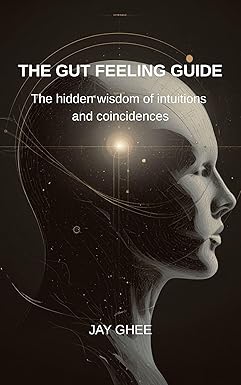
The Gut Feeling Guide
By Jay Ghee The Gut Feeling GuideThe Gut Feeling Guide is a journey into the hidden intelligence of intuition and the mysterious dance of coincidences. Blending reflective storytelling, spiritual insight, and practical guidance, the book shows you how to recognize...
Schedule an Event
info@jayghee.com
Book an Interview
info@jayghee.com
Contact Jay Ghee
info@jayghee.com